Property Snagging in Dubai: Handover Checklist, Costs and Your Rights


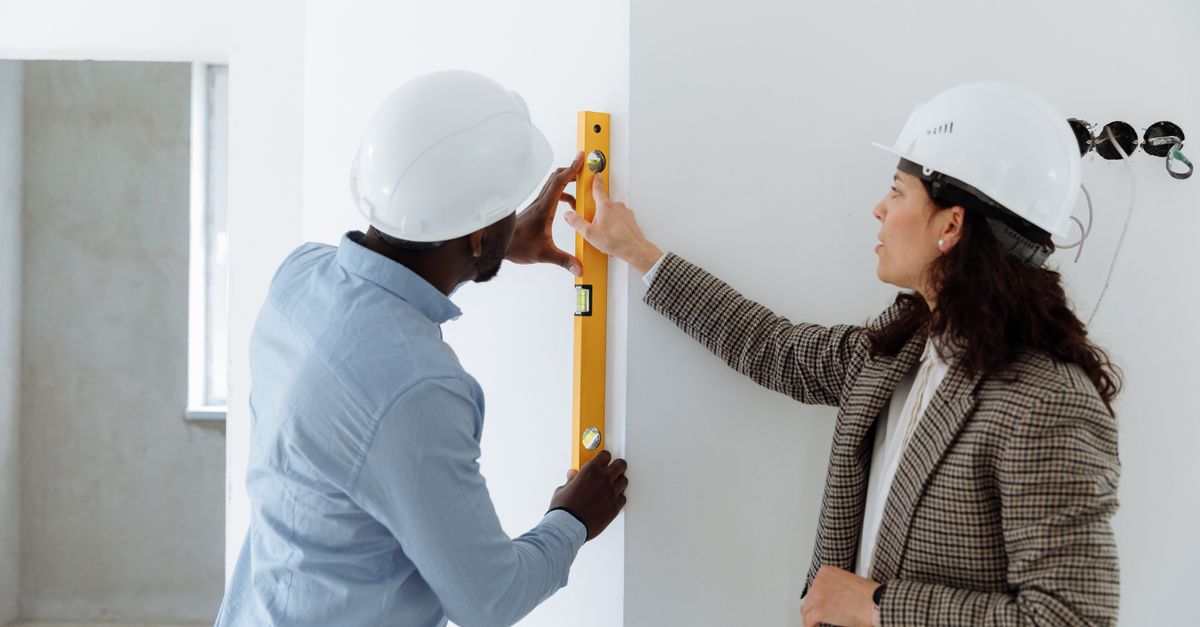
Short answer: Property snagging in Dubai is the inspection of a newly completed home for defects before you take handover, so the developer fixes them at its cost rather than yours. A professional inspection costs roughly AED 800 to 3,500 for an apartment and AED 3,000 to 6,000 for a villa in 2026, takes three hours or more, and typically produces a list of 100 to 250 items, most of them cosmetic. Your legal backstop is Article 40 of Dubai Law No. 6 of 2019: the developer must fix defective mechanical, electrical and plumbing installations for one year from handover and structural defects for ten years from the completion certificate. Neither period can be signed away. If the developer won't act, the Dubai Land Department takes complaints free of charge through the Dubai REST app and responds within five business days.
Key takeaways
- Snag before you sign for the keys. The handover notice is the point of maximum leverage; after it, every fix is a request rather than a condition.
- Budget AED 3,000 to 6,000 for a villa inspection, plus 40% to 60% of that for a re-inspection if the first list is long.
- One year on installations, ten years on structure. Law No. 6 of 2019 sets both, and Article 40(d) voids any clause that tries to shorten them.
- Service charges start at possession, not at the completion certificate, unless you are the one delaying handover.
- Dubai delivered a record 24,800 homes in H1 2026 and expects 55,000 to 70,000 for the year, so snagging capacity is stretched. Book early.
What is property snagging, and when does it happen?
A snag is any defect, omission or unfinished item in a new home: a door that doesn't close, a tile that's hollow, a sliding window that lets dust in, an air-conditioning grille that blows warm. Snagging is the organised hunt for all of them, written up as a list the developer is asked to fix. In Dubai it sits at a specific point in the off-plan handover sequence, and knowing where helps you use it.
| Step | Who acts | What happens |
|---|---|---|
| 1. Completion certificate | Dubai Municipality | Issued after a joint final inspection by Building Control, Survey, Civil Defence, RTA and the utilities |
| 2. Completion notice | Developer to buyer and DLD | States the unit is ready and carries the Property Index Number |
| 3. Final payment | Buyer | Remaining instalments plus admin, title deed and Oqood fees, first service-charge bill and utility registration |
| 4. Snagging inspection | Buyer or inspector | Usually within the 30 days the completion notice allows, in practice; there is no statutory window |
| 5. Rectification | Developer's contractor | Items fixed; a re-inspection confirms they were fixed, not painted over |
| 6. Handover notice and keys | Developer | Issued once the list is cleared or agreed; possession passes |
| 7. DEWA activation | Buyer | Deposit and connection fees paid; water and power on within 15 working hours |
| 8. Title deed | DLD via the developer | Oqood converts to a title deed, typically 30 to 90 days after handover |
The Dubai off-plan handover sequence in 2026. Sources: Dubai Law No. 6 of 2019; Engel & Völkers handover guide, Oct 2025; DEWA move-in service page; developer-reported title deed timing.
Step four is the one buyers rush. Developers often ask you to collect keys and snag afterwards, which is convenient for them because once you're in, every item becomes a maintenance request against a contractor who has moved to the next site. Inspect first. If you can't be in Dubai, a snagging firm will attend with your power of attorney.
Timing matters more this year than most. Cavendish Maxwell counted a record 24,800 homes delivered in the first half of 2026, 5,900 of them villas and townhouses, per Khaleej Times, and Cushman & Wakefield Core expects about 55,600 for the full year, the most since 2008. Every one of those homes needs inspecting in the same few months, so the good firms are booked out around big handover dates.
How much does snagging cost in Dubai in 2026?

There's no fixed tariff. Firms price by unit type, by square foot, or both, and the better ones bundle a re-inspection. The ranges below are drawn from published 2026 market rates and the few firms that publish prices.
| Property type | Typical fee (2026) | Notes |
|---|---|---|
| Studio | AED 800 to 1,500 | Budget operators from about AED 800 |
| 1-bedroom apartment | AED 1,000 to 2,000 | |
| 2-bedroom apartment | AED 1,300 to 2,500 | |
| 3-bedroom apartment | AED 1,600 to 3,500 | |
| Townhouse, 3 to 4 bedrooms | AED 2,500 to 4,000 | External works add time |
| Villa, 5 bedrooms and up | AED 3,000 to 6,000+ | Pool, roof and garden inspected |
| Re-inspection (de-snagging) | 40% to 60% of the original fee | Often included in premium packages |
| Thermal imaging | Included to AED 500 | Several firms now include it as standard |
| Drone roof survey | Quote on request | No Dubai firm publishes a price |
Snagging fees in Dubai, 2026, excluding 5% VAT. Sources: Real Estate Club Dubai market survey, July 2026; Gulf News, April 2023 (Metropolitan Premium Properties, AED 1.3 to 2 per sq ft).
Put that against the home. A four-bedroom villa of around 4,700 sq ft at AED 1.3 to 2 per sq ft comes out at AED 6,000 to 9,400 on the per-foot model, and AED 3,000 to 6,000 on the per-unit model. Either way it's less than a tenth of a percent of a villa worth AED 7 million or more, for a report that routinely finds waterproofing and air-conditioning faults that cost tens of thousands to fix later. The Snag Master, one of the larger firms, claims an average saving of about AED 98,000 per property. That's a marketing number, but the direction is right.
Two things to check before you book. First, whether the firm uses a moisture meter and a thermal camera; in a Dubai villa, water behind tiles and heat leaking through a badly sealed frame are the expensive problems, and neither shows on a visual walk. Second, whether the re-inspection is included. A long first list without a second visit is a list of promises.
The villa snagging checklist, room by room

Villas are harder to snag than apartments. They have more external surfaces, more private systems, and more places for water to go. Nakheel's own snagging guide makes the same point: façades, roof access, boundary walls, garden grading, irrigation and drainage all belong on the list, and none of them exist in a flat. Snagging firms report anywhere from about 100 to 250 items on a new villa, depending on how strictly they count. In one widely reported 2018 case a two-bed apartment in Remraam produced 144 defects, 17 of them serious.
| Area | What to check | Why it matters |
|---|---|---|
| Roof and terraces | Falls to drains, membrane edges, parapet cappings, standing water after a hose test | Waterproofing failures are the most expensive defect and the hardest to fix once furnished |
| External walls and boundary | Render cracks, paint coverage, boundary wall alignment, gate operation | Exposed to sun and sand; defects spread fast |
| Windows and external doors | Seals, locks, alignment, dust ingress, glass scratches, sliding door tracks | The most common villa complaint after waterproofing |
| Air conditioning | Every grille blowing cold with the system running, thermostat response, condensate drains, unit access | A villa may have four to six units; test each zone separately |
| Plumbing | Pressure at every tap, hot water at every outlet, drainage speed, leaks under sinks, water heater timers | Hidden leaks show up as damp patches months later |
| Electrical | Every socket and switch, DB labelling, earthing, external sockets, lighting circuits | Safety plus the cost of chasing walls later |
| Finishes | Hollow tiles (tap test), grout lines, paint runs, skirting gaps, door closing, kitchen alignment | Cheap individually, long as a list |
| Garden and pool | Ground levels falling away from the house, irrigation coverage, pool tiling, pump and filter running, drainage outlets | External works are the area most often skipped on a quick walkthrough |
Villa snagging checklist. Categories per Nakheel (June 2026) and Gulf News (April 2023); order reflects cost of a missed defect.
Practical rules from people who do this every week: walk the house in daylight, with the air conditioning running for at least an hour beforehand and every tap run until it's hot. Open and close every door and window twice. Photograph each item with something for scale, and number the photos to match the list. Then hand the developer one document, not forty WhatsApp messages.
Your legal rights: the one-year and ten-year rules

Dubai's defect rules are clearer than most buyers realise, and they're written into law rather than left to the sale contract. The core is Article 40 of Dubai Law No. 6 of 2019 on jointly owned property, which applies to villas in master communities as well as to apartments.
| Defect type | Developer liable for | Clock starts | Legal basis |
|---|---|---|---|
| Structural: foundations, columns, structural walls, roofs, façades | 10 years | Date of the completion certificate | Law 6/2019 Art. 40(a); Civil Code Arts. 821 to 824 |
| Installations: mechanical, electrical, sanitary and sewerage | 1 year | Date of handover to the owner | Law 6/2019 Art. 40(b) |
| Installations where the owner delays taking possession | 1 year | Date of the completion certificate | Law 6/2019 Art. 40(b) |
| Latent defects in a completed unit sold under a sale contract | Claims within 1 year of delivery unless a longer warranty is agreed | Day after delivery | Civil Code Arts. 495 and 510 (from 1 June 2026) |
Developer defect liability in Dubai. Sources: Dubai Legal Portal; Charles Russell Speechlys and Mayer Brown commentary on Federal Decree-Law No. 25 of 2025, in force 1 June 2026.
Three details are worth knowing. Article 40(d) makes any agreement that conflicts with these periods void, so a sale and purchase agreement offering a six-month warranty is giving you less than the law already does. The ten-year structural liability, known as decennial liability, moved house on 1 June 2026 when the new UAE Civil Code came into force: it was Articles 880 to 883 of the 1985 code and is now Articles 821 to 824, as Charles Russell Speechlys explains, with the same substance, including the rule that it cannot be excluded and a three-year window to claim from discovery. And the one-year installations clock runs from handover, which is another reason not to delay taking possession once the snag list is agreed: if you delay, the year runs from the completion certificate instead.
Most SPAs mirror the statutory one-year period as a "defect liability period" and some developers hold a retention from their contractor for the same twelve months. Read yours, but remember the law sets the floor. The separate Law No. 3 of 2026 on building quality and safety, issued in February, adds a long-term layer: owners will need a Quality and Safety Certificate 20 years after the completion certificate, with fines up to AED 1 million for non-compliance. It doesn't change handover rights, but it does mean the inspection culture in Dubai is tightening rather than loosening.
What happens if the developer won't fix the defects?
Most snag lists get cleared without drama, because a contractor still on site would rather fix a door than argue about it. When they don't, there is an escalation path and it starts cheaply.
- Write to the developer. One letter or email listing the items, the clause or article relied on, and a deadline. Keep it factual. This is the document every later step will ask for.
- File with the Dubai Land Department. The Real Estate Violations System takes complaints against developers through the DLD website or the Dubai REST app, free of charge, with a response within five business days. Attach the SPA, the snag list, the photos and your letter. It handles conduct and compliance; it does not award compensation.
- Try the Centre for Amicable Settlement of Disputes for claims up to AED 500,000. Most defect claims on a single villa fall under that threshold, and settlement is faster and cheaper than court.
- Go to the Dubai Real Estate Court, or arbitration if your SPA requires it. Compensation and rectification orders come from here. Expect an expert report to decide the technical question, and allow a year or more.
The courts do award damages for defects. In March 2025 the Dubai Real Estate Court ordered the operator of a residential building to pay an owner AED 100,000 after rainwater came through deficient waterproofing, with the expert report calling the breach a structural violation, per Gulf Today. The claim was for AED 220,000; the lesson is that documentation at handover is what turns a complaint into a case.
One thing a snag list can't do is stop the service charge clock. In October 2025 the Rental Disputes Centre set a general principle that owners who delay taking possession for their own reasons still owe service charges from project completion. The flip side, set out in The National's property column, is that charges run from possession, not before, when the delay is the developer's. Keep the dates in writing. How those charges are set and approved is covered in the handover section below.
Handover day: what it costs and what starts when

The inspection is one line in a short list of handover costs. Here is the stack for a villa.
| Item | Amount | When |
|---|---|---|
| Snagging inspection | AED 3,000 to 6,000 | Before handover |
| Re-inspection | AED 1,200 to 3,600 | After rectification |
| DEWA security deposit, villa | AED 4,000 (refundable; AED 2,000 for an apartment) | Move-in |
| DEWA activation and connection | About AED 130 to 330 depending on meter size | Move-in |
| Service charges | Per the RERA-approved budget, billed through Mollak | From possession |
| Title deed issuance | DLD fee per the SPA; see our DLD fees guide | 30 to 90 days after handover |
Villa handover costs, 2026. Sources: DEWA move-in service page; Dubai Land Department Mollak service; market fee ranges above.
Service charges deserve a word. Since 2020 every developer has had to bill them through the DLD's Mollak system against a budget audited by a RERA-accredited auditor, per the DLD service page, and the money sits in escrow. You can check the approved rate per square foot for your community in the Dubai REST app before you pay the first bill. The DEWA deposit for a villa is AED 4,000 and is refunded when you sell, on DEWA's published terms. The title deed closes the process; until it arrives your ownership sits on the Oqood register, which we explain in Oqood vs title deed, and the fees for the conversion are in our guide to DLD fees.
If you are buying one of our villas, the same advice applies. Selora Residences in District 11, Mohammed Bin Rashid City, is 32 four, five and six-bedroom villas, and Lua Residences sits in the same district. We build them ourselves rather than through a chain of sub-developers, which is the single biggest factor in how many items end up on a snag list. Bring your own inspector anyway. A buyer who checks is a buyer we'd rather have, and the Swank team can walk you through how handover works at either community before you commit.
Frequently asked questions
What is property snagging in Dubai?
Snagging is the inspection of a newly built home for defects before handover, so the developer fixes them at its own cost. It happens after the developer's completion notice and before you accept the keys, and covers finishes, doors and windows, air conditioning, plumbing, electrics and, for villas, the roof, external walls, garden and pool.
How much does snagging cost in Dubai?
In 2026, roughly AED 800 to 1,500 for a studio, AED 1,300 to 3,500 for a two or three-bedroom apartment, AED 2,500 to 4,000 for a townhouse and AED 3,000 to 6,000 or more for a large villa, plus 5% VAT. Per-square-foot pricing of AED 1.3 to 2 is also common. A re-inspection typically costs 40% to 60% of the original fee.
How long is the developer liable for defects in Dubai?
Under Article 40 of Dubai Law No. 6 of 2019, one year from handover for mechanical, electrical, sanitary and sewerage installations, and ten years from the completion certificate for structural defects. Any contract clause that shortens these periods is void.
Can I refuse handover until the snags are fixed?
You can decline to accept the keys until the agreed list is rectified, and that is the point of snagging before handover. Be aware that if the delay is on your side, the Rental Disputes Centre has ruled that service charges still run from project completion, and the one-year installations warranty runs from the completion certificate rather than from handover.
What if the developer refuses to fix the defects?
Write to the developer with the list and a deadline, then file a complaint through the Dubai Land Department's Real Estate Violations System on the Dubai REST app, which is free and answered within five business days. Claims up to AED 500,000 can go to the Centre for Amicable Settlement of Disputes; larger or contested claims go to the Dubai Real Estate Court or arbitration.
When do service charges start on a new property in Dubai?
From the date you take possession, billed through the DLD's Mollak system against a RERA-approved budget. If you delay taking possession for your own reasons, the Rental Disputes Centre's October 2025 principle makes you liable from project completion.
How many snags are normal in a new villa?
Snagging firms in Dubai report anywhere from about 100 to 250 items on a new villa, most of them cosmetic: paint, grout, door adjustment and tile alignment. The ones that matter are waterproofing, air conditioning, window seals and plumbing leaks, which is why a moisture meter and thermal camera are worth paying for.
Sources & further reading: Dubai Law No. 6 of 2019 (Dubai Legal Portal) · Dubai Law No. 19 of 2020 (Dubai Legal Portal) · Dubai Law No. 3 of 2026 (Dubai Legal Portal) · Charles Russell Speechlys: Civil Code Articles 821 to 824 · DLD: Real Estate Violations System · DLD: service charge approval via Mollak · Rental Disputes Centre: service charge principle · The National: when off-plan service charges start · Nakheel: snagging villas vs apartments · Gulf News: snagging fees · Khaleej Times: H1 2026 deliveries · DEWA: move-in service
Written by Faizan Ahmed, Digital & SEO Lead, Swank Development. Last updated 8 October 2026. Figures are indicative and were verified against official UAE government sources at the time of writing; always confirm current fees with the Dubai Land Department or your conveyancer.