Holiday Home Licensing in Dubai: DET Permit, Costs and ROI


Short answer: Short-term letting in Dubai requires a holiday home permit from the Department of Economy and Tourism (DET), per unit. The licence costs AED 3,570 a year for a villa or townhouse and AED 1,520 for an apartment, plus a Tourism Dirham of AED 10–15 per occupied bedroom per night, remitted by the 15th of each month. Individual bookings are capped at 90 days; beyond that it becomes a long-term tenancy.
Key takeaways
- A permit is required per unit before you list anywhere — Airbnb, Booking.com or direct. Unlicensed listing carries penalties.
- Villa licence: AED 3,570/year. Apartment or studio: AED 1,520/year, including registration and innovation fees.
- Tourism Dirham is per occupied bedroom per night — AED 10 Standard or AED 15 Deluxe — regardless of how many guests share that bedroom.
- Monthly filing is mandatory: payment orders generate on the 11th and submissions are due by the 15th, with automatic penalties for late filing.
- Short-term can lift gross yield by 2 to 4 percentage points on the right villa — but operating costs run 25% to 40% of revenue, far above long-term letting.
Is short-term letting legal in Dubai?
Yes, and it is properly regulated rather than tolerated. Dubai's Department of Economy and Tourism operates a holiday homes regime that licenses individual units and classifies them by quality. This is a meaningful distinction from cities where short-term letting exists in a grey zone or has been progressively banned — Dubai has chosen to formalise it.
Two routes exist:
- Individual owner permit. You license your own unit and operate it yourself. Suitable for one or two properties.
- Licensed operator. You hand the unit to a DET-licensed holiday homes company that manages permitting, guests, cleaning and compliance for a share of revenue, typically 15% to 25%.
Owners living outside the UAE almost always use an operator. The compliance burden — monthly Tourism Dirham filing, guest registration, 24-hour contactability — is not realistically manageable from abroad.
What does a holiday home licence cost?

| Item | Cost | Frequency |
|---|---|---|
| Villa or townhouse permit | AED 3,570 | Per unit, per year |
| Apartment or studio permit | AED 1,520 | Per unit, per year |
| Registration and innovation fees | Included above | — |
| Tourism Dirham | AED 10 (Standard) / AED 15 (Deluxe) | Per occupied bedroom, per night |
| DEWA account in owner's name | Standard deposits | One-off |
| Furnishing to DET standard | AED 80,000 – 400,000 for a villa | One-off |
| Operator management fee | 15% – 25% of revenue | Ongoing |
| Cleaning & linen | AED 250 – 600 per turnover | Per stay |
DET fees as at 2026. Classification (Standard, Deluxe, Premium) is assigned by DET based on quality, amenities and location, and determines the Tourism Dirham rate.
The Tourism Dirham mechanic is worth understanding precisely, because it is charged per occupied bedroom per night, not per guest and not per booking. A four-bedroom villa fully occupied for 20 nights a month at the Deluxe rate is 4 × 20 × AED 15 = AED 1,200 a month. You collect it from the guest and remit it — but you must account for it correctly whether or not you collected it.
What are the compliance obligations?

- Obtain the permit before listing. Not after the first booking.
- Classify the unit — DET assigns Standard, Deluxe or Premium based on quality, amenities and location.
- Register every guest as required, with passport details.
- Collect and remit the Tourism Dirham. The Holiday Homes 2.0 system auto-generates payment orders on the 11th of each month and submissions are due by the 15th. Late filing triggers automatic penalties.
- Observe the 90-day booking cap. A single booking longer than 90 days is a long-term tenancy and falls under RERA's rules instead — including Ejari registration. See our guide to letting rules in Dubai.
- Meet the furnishing and safety standard DET requires, including working smoke detectors and a first aid kit.
- Be contactable 24 hours a day, in person or through a licensed operator.
- Renew annually — the permit lapses and re-listing on an expired permit is a breach.
Two further checks before you commit. Confirm that your community's owners' association permits short-term letting: some Dubai communities restrict or prohibit it in their rules, and a DET permit does not override a community covenant. And note the VAT position — short-term accommodation is a taxable supply in the UAE, so once turnover crosses the mandatory registration threshold you have a VAT obligation that a long-term landlord does not.
Does the ROI actually beat long-term letting?

Sometimes, substantially. Often, not at all. The variables that decide it are occupancy and operating cost, and both are property-specific.
| Long-term let | Short-term (holiday home) | |
|---|---|---|
| Property | AED 5M villa | AED 5M villa |
| Annual gross revenue | AED 250,000 | AED 420,000 (ADR AED 2,300 × 50% occupancy) |
| Gross yield | 5.0% | 8.4% |
| DET permit | — | −3,570 |
| Tourism Dirham (4 beds, 182 nights) | — | −10,920 |
| Operator fee (20%) | — | −84,000 |
| Cleaning & linen (90 turnovers) | — | −36,000 |
| Utilities (owner-paid) | — | −36,000 |
| Letting / management fee | −15,000 | — |
| Service charges | −22,500 | −22,500 |
| Maintenance & replacement | −25,000 | −50,000 |
| Insurance | −3,000 | −5,000 |
| Net income | AED 184,500 | AED 172,010 |
| Net yield | 3.69% | 3.44% |
Illustrative. Excludes the one-off furnishing cost of AED 80,000–400,000 required for short-term operation.
At 50% occupancy, the short-term model produces a higher gross yield and a slightly lower net yield — before the furnishing capital expenditure. That is the honest picture, and it is the opposite of the headline story usually told about Dubai short-term rentals.
What changes it is occupancy. At 70% occupancy the same villa grosses about AED 588,000 and nets close to AED 260,000 — a 5.2% net yield, comfortably ahead of long-term. Short-term letting is an operating business with high fixed costs and steep operating leverage, not a passive yield uplift.
Which villas actually work as holiday homes?
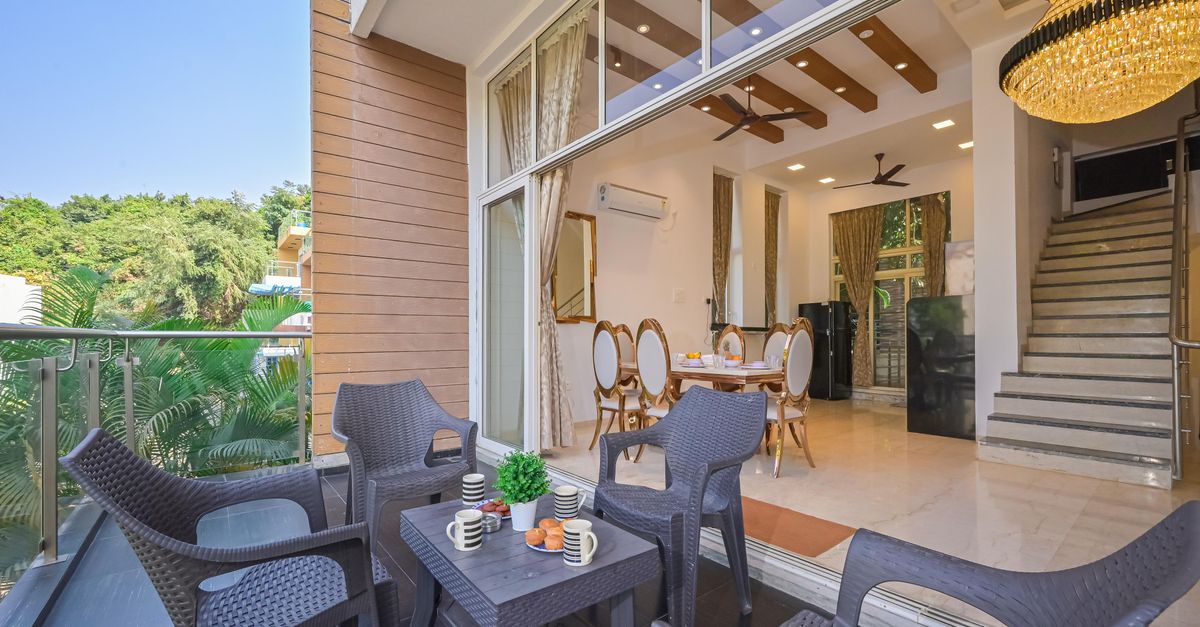
- A private pool is close to mandatory for a villa commanding a premium nightly rate. Without one you are competing on price.
- Resort-style community amenity — a lagoon, a beach, a clubhouse — drives both the nightly rate and the review scores that drive future occupancy.
- Proximity to demand. Downtown, the beach and the airport. A central location like MBR City is 10 to 20 minutes from all three, which is a genuine operating advantage over the outer villa districts.
- Four or more bedrooms. Group and multi-generational travel is where villas beat hotels; two-bedroom villas compete directly against apartments and lose.
- An OA that permits it. Check before you buy, not after.
- Seasonality tolerance. Dubai's short-term market is strongly seasonal — October to April carries the year, and July and August are thin.
Communities built around lagoons and clubhouses — such as Selora Residences with Laguna Maré and Casa Selora, or Lua Residences with its swimmable crystal lagoon and waterside tracks — are structurally better suited to this than a conventional villa subdivision, because the amenity is what a short-stay guest is paying for.
Before deciding, compare against the straightforward alternative in our 2026 rental yields analysis, and check the ownership costs in our service charge guide.
Frequently asked questions
Do I need a licence to rent my Dubai property on Airbnb?
Yes. Short-term letting requires a holiday home permit from Dubai's Department of Economy and Tourism, obtained per unit before you list on any platform. Listing without a permit is a breach and carries penalties.
How much does a Dubai holiday home licence cost?
AED 3,570 per year for a villa or townhouse and AED 1,520 for an apartment or studio, including registration and innovation fees. On top of that you collect and remit a Tourism Dirham of AED 10 (Standard) or AED 15 (Deluxe) per occupied bedroom per night.
What is the Tourism Dirham and how is it calculated?
A per-night levy collected from guests and remitted to DET, charged per occupied bedroom per night rather than per guest or per booking — AED 10 for Standard and AED 15 for Deluxe classification. Payment orders are generated on the 11th of each month and submissions are due by the 15th, with automatic penalties for late filing.
Is there a limit on how long a holiday home booking can be?
Yes — individual bookings are capped at 90 days. A stay longer than that is classified as a long-term rental and falls under RERA's tenancy rules instead, including mandatory Ejari registration.
Is short-term letting more profitable than long-term in Dubai?
Only at high occupancy. At around 50% occupancy a short-term villa produces a higher gross yield but a similar or slightly lower net yield than a long-term let, before the one-off furnishing cost. At 70% occupancy it clearly wins. It is an operating business with high fixed costs, not a passive uplift.
Can my community stop me letting short-term?
Yes. Some Dubai owners' associations restrict or prohibit short-term letting in their community rules, and a DET permit does not override a community covenant. Check the OA rules before buying if short-term letting is part of your plan.
Sources & further reading: Dubai Department of Economy and Tourism · Dubai Land Department · UAE Government portal
Written by Faizan Ahmed, Digital & SEO Lead, Swank Development. Last updated 9 September 2026. Figures are indicative and were verified against official UAE government sources at the time of writing; always confirm current fees with the Dubai Land Department or your conveyancer.