Moving to Dubai in 2026, What It Costs and How to Set Up Your Life


Short answer: Moving to Dubai in 2026 starts with a residence visa: an employer visa for two years, a 5 year green visa if you earn AED 15,000 a month in a skilled job, a 10 year golden visa through AED 2m of property, or a 1 year remote work visa on USD 3,500 a month. Budget about AED 12,000 to 18,000 a month for one person, and expect your first month's rent cheque, deposits and fees up front.
Key takeaways
- Most people move on an employer sponsored visa valid for two years, while the green visa lets skilled employees on AED 15,000 a month sponsor themselves for five years.
- Renting a home means paying a deposit of around 5% of the annual rent, an agent's fee of about 5%, AED 177.75 for Ejari online and a refundable DEWA deposit of AED 2,000 for a flat or AED 4,000 for a villa.
- KHDA confirmed there will be no fee increase at Dubai's private schools for the 2026 to 2027 academic year.
- Licences from 57 countries can be exchanged for a Dubai licence after an eye test, and RTA swapped 58,082 of them in 2025.
- Apartment rents in Dubai Marina and Business Bay fell more than 12% in the year to Q3 2026, so new tenants have more room to negotiate than they did in 2025.
Which visa do you need to move to Dubai in 2026?
Most people move to Dubai on an employment visa sponsored by their new company. If you don't have a UAE employer, the main self sponsored routes are the green visa, the golden visa and the remote work visa. Which one fits depends on how you earn and whether you'll buy property.
| Visa | Length | Main condition | Sponsor |
|---|---|---|---|
| Employment residence visa | 2 years, renewable | A job offer from a UAE employer | Your employer |
| Green visa, skilled employee | 5 years | Bachelor's degree, MOHRE skill level 1 to 3, AED 15,000 a month salary | Yourself |
| Green visa, freelancer or self employed | 5 years | MOHRE freelance permit and AED 360,000 a year income in each of the last two years | Yourself |
| Golden visa, property | 10 years | Property worth AED 2m or more | Yourself |
| Remote work visa | 1 year, renewable | Job with a company outside the UAE paying USD 3,500 a month | Yourself |
Sources: UAE government portal; ICP Green Residence guide; GDRFA Dubai virtual work residence service, all viewed November 2026.
Employment visa
The UAE government portal says a work residence visa is valid for two years and renewable, and your employer has to apply for it. In practice the company handles the entry permit, the medical test and the Emirates ID application, and you turn up where you're told. Your residence is tied to the job, so if you're planning to change employers soon, read your contract's notice terms first.
Green visa
ICP's Green Residence guide sets out two routes that matter to most movers. Skilled employees need a valid UAE contract, a bachelor's degree, a job classed at levels 1 to 3 by the Ministry of Human Resources and Emiratisation, and a salary of AED 15,000 a month. Freelancers need a MOHRE freelance permit, a degree or specialised diploma, and at least AED 360,000 of income in each of the previous two years. You can sponsor your spouse and children under the approved rules.
Golden visa
Property worth AED 2m or more can get you a 10 year golden visa with no employer involved. That's why plenty of people who move on a job visa switch once they buy. Our golden visa vs investor visa comparison walks through which one suits you.
Remote work visa
If you keep a job abroad, GDRFA's virtual work residence service gives you a one year residence, renewable, with no local sponsor. You'll need proof of remote work for a company outside the UAE, a salary certificate showing at least USD 3,500 a month, health insurance and a medical fitness test. The listed fees are AED 200 for the permit, AED 20 in knowledge and innovation fees, AED 500 if you apply from inside the country and AED 20 for delivery. Some advisers have reported a higher income bar this year. GDRFA's own page still says USD 3,500, but check it again the week you apply.
How do you get an Emirates ID, health insurance and a bank account?
Your Emirates ID comes as part of the residence process, after a medical fitness test and a biometrics appointment. Health insurance has to be in place for the visa to go through. A bank account comes last, because nearly every bank will want to see the ID first.
The residence steps, in order
- Enter the UAE on the entry permit your sponsor arranges, or on a visit visa if you're applying from inside the country.
- Take the medical fitness test at an approved centre.
- Get health insurance that meets Dubai's rules, if your sponsor hasn't arranged it.
- Give your fingerprints and photo at the biometrics appointment for the Emirates ID.
- Receive the residence approval, then collect or receive your Emirates ID card.
The Emirates ID is the card you'll use for almost everything: the bank, your phone contract, Ejari, DEWA, school places and the RTA. Carry a photo of both sides on your phone from day one.
Health insurance is compulsory
Health insurance has been mandatory in Dubai for years. When the federal government extended a basic plan to private sector workers in the northern emirates from 1 January 2025, at a price from AED 320 a year, Khaleej Times noted that the system was already mandatory in Abu Dhabi and Dubai. In Dubai, the employer covers the employee. Dependants are often the family's own cost, which our cost of living guide puts at roughly AED 1,300 to 2,500 a month for a family on a mid tier plan.
Don't assume the cheapest plan is good enough. Check whether it covers maternity, outpatient visits and the hospitals near where you'll live. And if you're self sponsored, the insurance is yours to buy before the visa can be issued.
Opening a bank account
Expect the bank to ask for your passport with the residence visa, your Emirates ID and something that proves income, such as a salary certificate or employment letter. Many employers have a preferred bank for payroll, which can speed things up. Ask HR before you walk into a branch.
Two things to sort early. First, your new account matters for rent, because most landlords still take post dated cheques, and you can't write one without a UAE chequebook. Second, your credit history in Dubai starts from zero. If you plan to buy a home later, a clean record of paying cards and loans on time helps when you apply. Our UAE mortgage rates guide shows what banks are charging this month and how much you can borrow.
The whole residence process often takes a couple of weeks once you're in the country. Book the medical and biometrics as soon as you're told to, because everything else waits on that card.
How does renting a home in Dubai work?
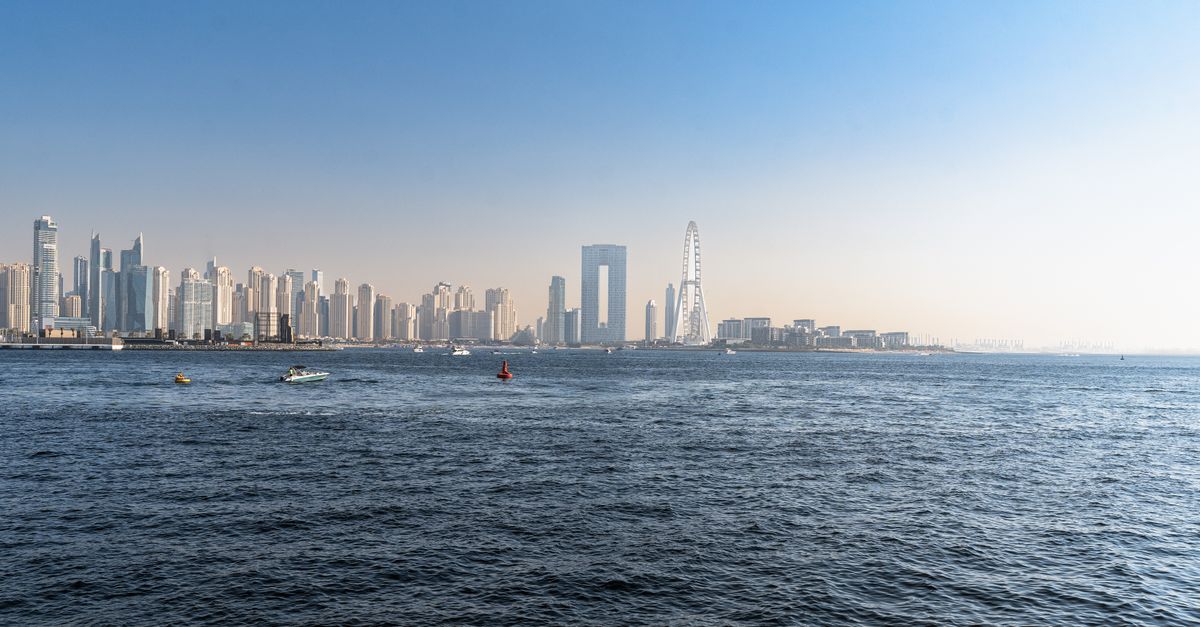
You find a place, agree the rent and the number of cheques, pay a deposit and the agent's fee, register the lease on Ejari, and then open your DEWA account. Most moves take a week or two from viewing to keys, and the paperwork runs on your Emirates ID.
What rent costs in 2026
| Area | 1 bed apartment | 2 bed apartment | Monthly cost of a 1 bed |
|---|---|---|---|
| Al Nahda | AED 56,000 | AED 72,000 | about AED 4,667 |
| Deira | AED 66,000 | AED 109,000 | about AED 5,500 |
| Dubai Marina | AED 103,000 | AED 157,000 | about AED 8,583 |
| Business Bay | AED 104,000 | AED 148,000 | about AED 8,667 |
Source: Bayut, Dubai Rental Market Report H1 2026, page updated 12 November 2026. Average annual advertised rents. Monthly column is Swank Development's division by 12.
Those are asking rents from the Bayut H1 2026 report. For families, Mirdif villas averaged AED 142,000 a year for a 3 bed and AED 166,000 for a 4 bed. The trend is on your side. Savills' Q3 data, reported by Khaleej Times, had apartment rents in Dubai Marina down 12.8% and Business Bay down 12.2% year on year. In a falling market, ask for more cheques at the same price.
The money you'll hand over at the start
- Security deposit: usually 5% of the annual rent unfurnished and 10% furnished, refundable at the end
- Agent's fee: typically 5% of the annual rent, plus VAT
- Ejari registration: AED 177.75 online, or about AED 220 at a trustee centre
- DEWA deposit: AED 2,000 for a flat or AED 4,000 for a villa, refundable
- The first rent cheque, which on a four cheque lease is a quarter of the year
On a 1 bed in Business Bay at AED 104,000, that's about AED 38,600 before you buy a sofa: AED 5,200 deposit, AED 5,200 agent fee, Ejari, the DEWA deposit and a first cheque of AED 26,000. A 4 bed Mirdif villa at AED 166,000 needs about AED 62,300 on the same basis.
Ejari and DEWA
Ejari is the official registration of your lease with the Dubai Land Department. You need it to connect DEWA, sponsor family visas and often to enrol children in school. Our Ejari registration guide covers the steps. Once Ejari is done, DEWA connects electricity and water, and a 5% municipality housing fee on your annual rent appears on the monthly bill.
Cheques and rent rises
One to four post dated cheques is still the norm, and fewer cheques can buy you a lower rent. Some landlords now accept monthly payments, though usually at a higher price. At renewal, the RERA rental index decides how much your landlord can add, and our RERA calculator guide explains how to check it. I'd sign for 12 months first, learn the city, then decide where to settle.
How much does it cost to live in Dubai each month?
A single professional needs roughly AED 12,000 to 18,000 a month for a 1 bed in a good area, a car and a social life. A family of four needs about AED 20,000 to 35,000 for a practical to comfortable life, and AED 50,000 or more with a villa and top schools. Those are the bands in our line by line cost of living guide, and the gap between them is mostly rent and school fees.
A single person
Rent decides your month. A 1 bed in Al Nahda at Bayut's average of AED 56,000 a year costs about AED 4,900 a month once you add the 5% housing fee. The same flat in Business Bay at AED 104,000 is closer to AED 9,100. That one choice moves you from the bottom of the AED 12,000 to 18,000 band to the top of it, before you've bought a coffee.
| Single person, monthly | Al Nahda 1 bed | Business Bay 1 bed |
|---|---|---|
| Rent (Bayut H1 2026 average, divided by 12) | AED 4,667 | AED 8,667 |
| Municipality housing fee at 5% of rent | AED 233 | AED 433 |
| Housing total | AED 4,900 | AED 9,100 |
| Typical all in monthly budget for one person | AED 12,000 to 18,000 | AED 12,000 to 18,000 |
Sources: Bayut Dubai Rental Market Report H1 2026; Swank Development cost of living guide, September 2026. Housing fee calculated at 5% of annual rent.
A family of four
| Family of four, monthly | Practical | Comfortable |
|---|---|---|
| Housing | AED 8,000 to 11,000 | AED 13,000 to 20,000 |
| School fees, 2 children | AED 4,000 to 6,000 | AED 8,000 to 12,000 |
| DEWA | AED 700 to 1,100 | AED 900 to 1,800 |
| Groceries | AED 2,000 to 2,800 | AED 2,500 to 4,000 |
| Transport | AED 1,200 to 1,800 | AED 1,800 to 3,000 |
| Health insurance | AED 800 to 1,300 | AED 1,300 to 2,500 |
| Total, all lines | about AED 19,000 to 27,650 | about AED 33,650 to 53,600 |
Source: Swank Development, Cost of Living in Dubai 2026, September 2026. The total includes lines not shown here, such as the housing fee, telecoms, leisure and, in the comfortable band, domestic help.
Look at the two biggest rows. Housing and schools together make up well over half of either column, which is why two families on the same salary can live very differently. A 2 bed flat and a CBSE school is one budget. A villa and an IB school is another entirely.
What helps
There's no personal income tax in the UAE, so your salary is your take home pay. VAT is 5%. Many relocation packages still include a housing or school allowance, so get the exact amounts in writing before you compare offers. And remember the one off costs: the rental deposits above, furniture, a car and your first few months of school registration fees can easily run past AED 60,000 for a family.
How do schools and KHDA fees work when you move to Dubai?
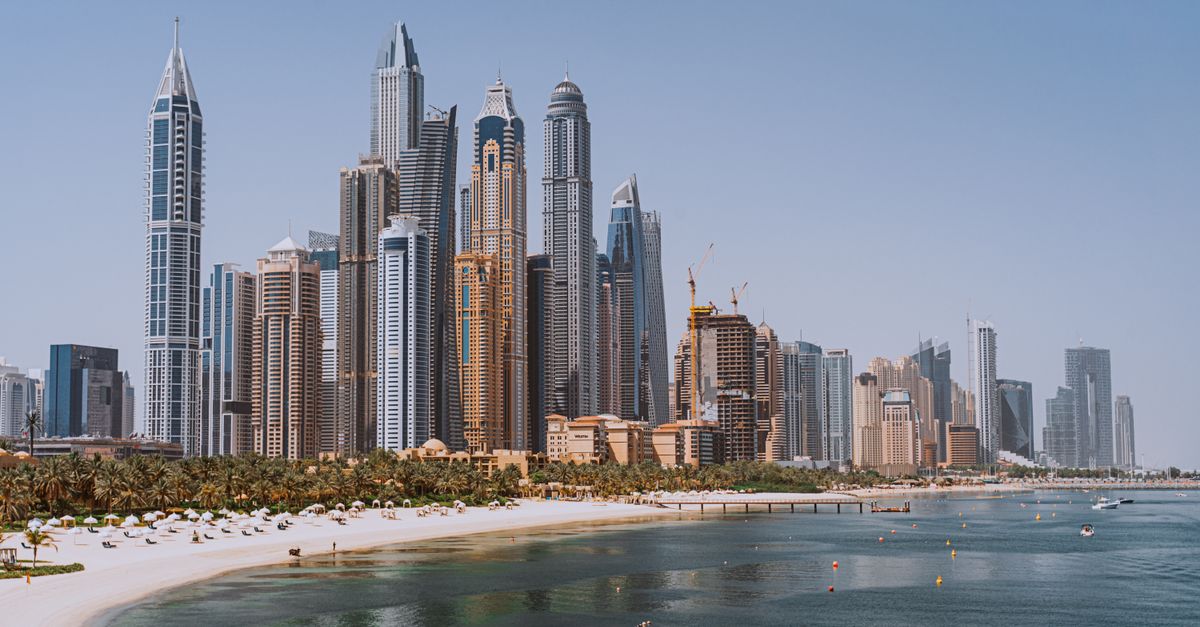
Dubai's private schools are regulated by KHDA, the Knowledge and Human Development Authority, which inspects them, publishes their ratings and controls fee increases. For the 2026 to 2027 academic year, KHDA confirmed there would be no fee increase at all.
That decision, announced through the Dubai Media Office on 22 May 2026, came as part of a wider support package. The same release said private schools offer 17 curricula, that enrolment rose 6% in 2025, and that about 9,000 new affordable places were added this academic year, with the affordable segment now serving around 230,000 students. Six new schools opened and more than 30 applications are under review.
What families actually pay
| Curriculum | Typical annual fee per child |
|---|---|
| Indian (CBSE or ICSE) | AED 14,000 average |
| British, Foundation to Year 6 | AED 30,000 to 55,000 |
| British, Years 10 to 13 | AED 55,000 to 112,000 |
| American | AED 35,000 to 75,000 |
| IB | AED 65,000 average |
| All Dubai schools | about AED 42,000 average |
Source: Swank Development, Cost of Living in Dubai 2026, September 2026, based on KHDA regulated fees for the 2026 to 2027 year. Check the school's KHDA fee sheet for exact figures.
Fees rise as children move up year groups, so price the whole school career, not just the entry year. Registration, uniforms, books and the school bus add more on top.
How to pick a school
- Decide the curriculum first, because switching later is hard, especially in the senior years.
- Check each school's latest inspection rating on the KHDA website.
- Ask about waiting lists in your child's year group before you sign a lease.
- Time the drive at school run hours, not at midday.
That third point catches people out every year. Popular schools can be full in certain year groups, and you don't want to sign a 12 month lease in Al Barsha and then find the only place is in Mirdif. Many schools will also ask for your Ejari and residence details at enrolment, so get the order right: school shortlist, then lease, then application.
Moving mid year
British, American and IB schools start their year in late August, while Indian curriculum schools start in April. Arriving mid year is fine, but you'll have fewer choices. If you can, apply from abroad as soon as the job is confirmed, and keep your child's last reports, transfer certificate and vaccination record ready to upload. Some documents from outside the UAE need attestation before a school can accept them, which takes weeks, so ask each school early.
My advice to parents: let the school decide the area, not the other way round. A great flat 50 minutes from the school gate stops feeling great by October.
Where should you live in Dubai, and can you drive on your home licence?
Pick your area by commute and school first, then by budget. And if your licence was issued in one of 57 eligible countries, you can exchange it for a Dubai licence without lessons or a road test.
Choosing an area
Dubai had 4,807,185 residents on 29 September 2026, and they're spread over a city that's much longer than it is wide. A home on the wrong side of Sheikh Zayed Road can add a long detour to every journey. Rough rules I give clients:
- Work in Business Bay or the financial district and want to walk or take the Metro: Business Bay itself, or a flat along the Metro Red Line.
- Young family on a budget who wants a garden: Mirdif or Al Khawaneej, with 3 bed villas in Mirdif averaging AED 142,000 a year.
- Want the beach and don't mind paying for it: Jumeirah or Umm Suqeim for villas, Dubai Marina for flats.
- Want space, new homes and a central location: MBR City and Meydan, close to the middle of the city.
Our full guide to the best areas to live in Dubai goes area by area with rents and commute times. If you're nervous about the region after this year's events, our honest look at whether Dubai is safe to live in and invest in is worth ten minutes.
Converting your driving licence
RTA said in a January 2026 release that it exchanged 58,082 foreign licences in 2025, from 57 countries: five in the GCC, 38 in Europe, 13 in Asia and Latin America, and one in Africa. Recent additions include Kyrgyzstan, Kosovo, North Macedonia, Croatia and the US state of Texas.
To exchange, you'll need:
- A valid licence from an eligible country, the original, not a copy.
- An eye test at an approved optical centre.
- Your Emirates ID and residence visa.
- To apply in person through RTA's website or a customer happiness centre, and pay the fees.
If your country isn't on the list, you'll go through a Dubai driving school, which means lessons and tests and can take weeks or months. Start early. Villa areas in particular are hard to live in without a car.
Getting around without a car
The Metro is clean, cheap and air conditioned, and the Red and Green lines cover the older city and the main business districts well. Taxis and ride hailing fill the gaps. Further out, a Metro Gold Line has been announced for 2032, and its route passes MBR City, Nad Al Sheba and Meydan, though the station list isn't published yet.
If you'll rely on the Metro, live within a ten minute walk of a station. In August, that walk is the whole difference between a good commute and a bad one.
What should you do in your first 30 days in Dubai?
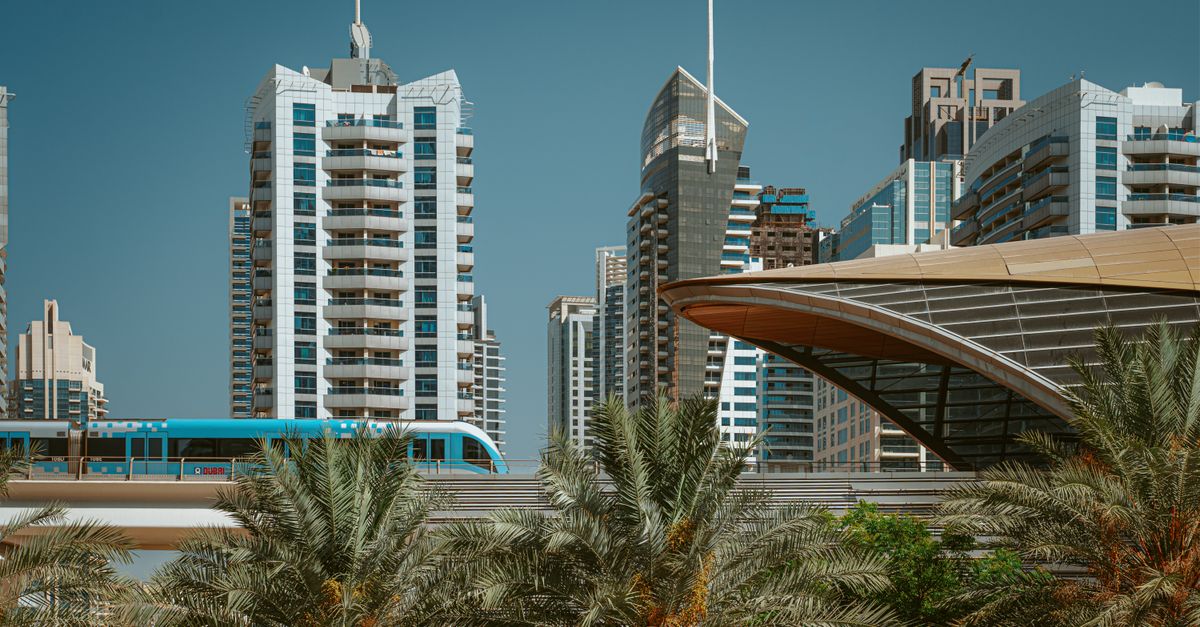
Get the residence and Emirates ID moving in week one, sign a lease in week two, connect DEWA and open a bank account in week three, and spend week four on schools, your licence and the smaller jobs. Here's the order I'd follow.
Week 1
- Land with your passport, entry permit and original documents, including degree certificates if your visa needs them.
- Get a local SIM. Almost every app and service will text a code to a UAE number.
- Book the medical fitness test and biometrics as soon as your sponsor or typing centre gives you the dates.
- Confirm health insurance is active, and keep the policy number handy.
- Stay in a serviced apartment or short let close to work while you look.
Week 2
- View homes in two or three areas you've already shortlisted by commute and school.
- Check the agent and the listing permit before you pay anything.
- Agree the rent, number of cheques and who pays for maintenance, in writing.
- Sign, pay the deposit and the agent's fee, and register Ejari.
Week 3
- Open your DEWA account using the Ejari, and pay the refundable deposit.
- Open a bank account and order a chequebook, since rent cheques depend on it.
- Set up home internet, which can take a few days to install.
- Start family visas for a spouse and children if you're the sponsor.
Week 4
- Book the eye test and exchange your driving licence, or enrol in a driving school.
- Submit school applications with Ejari, residence details and your children's records.
- Register with a GP or clinic covered by your insurance.
- Set a monthly budget against the real numbers, not the estimates.
After the first month
Once you're settled, some people start looking at buying. That's a bigger decision, and I wouldn't rush it. Give yourself six months of living in an area before you commit, and look at the numbers carefully. Banks lend expatriates up to 80% on a first home under AED 5m, and a property worth AED 2m or more can move you onto a 10 year golden visa. Our mortgage rates guide is the place to start that sum.
Keep a folder, paper or digital, with your passport, visa, Emirates ID, Ejari, DEWA account number, insurance card and tenancy contract. You'll be asked for some mix of those every week for the first few months, and having them in one place saves more time than any app.
Frequently asked questions
How much money do you need to move to Dubai?
Plan for your first month's costs plus the upfront rental bill. On a 1 bed in Business Bay at AED 104,000 a year, the deposit, agent's fee, Ejari, DEWA deposit and a first quarterly cheque come to about AED 38,600. Monthly living costs for one person run around AED 12,000 to 18,000, and much more for a family with children in private school.
Can I move to Dubai without a job?
Yes, if you qualify for a self sponsored visa. The remote work visa needs a job with a company outside the UAE paying at least USD 3,500 a month. The green visa for freelancers needs a MOHRE permit and AED 360,000 a year of income in each of the last two years. Property worth AED 2m or more can qualify you for a 10 year golden visa.
What salary do you need for a green visa in Dubai?
Skilled employees need a monthly salary of at least AED 15,000, a bachelor's degree, a valid UAE employment contract and a job classed at levels 1 to 3 by the Ministry of Human Resources and Emiratisation, according to ICP. The green visa lasts five years and lets you sponsor yourself and your family.
How much is the DEWA deposit in Dubai?
DEWA takes a refundable security deposit of AED 2,000 for an apartment and AED 4,000 for a villa when you open an account. You need a registered Ejari tenancy contract first. Your monthly DEWA bill also carries the Dubai Municipality housing fee, which is 5% of your annual rent spread across the year.
Is health insurance mandatory in Dubai?
Yes. Health insurance is compulsory for residents in Dubai, and employers must cover their employees. Dependants are often the family's own cost. Self sponsored residents, such as remote workers, must show valid health insurance before the residence permit is issued. Check what your plan covers, as basic policies can exclude maternity and some outpatient care.
Can I use my foreign driving licence in Dubai?
If it was issued in one of the 57 countries RTA recognises, you can exchange it for a Dubai licence after an eye test, without lessons or a road test. You need the original valid licence and must apply in person. Licences from other countries mean going through a Dubai driving school and its tests.
Are Dubai school fees going up in 2026?
No. KHDA confirmed on 22 May 2026 that there will be no fee increase at Dubai's private schools for the 2026 to 2027 academic year. Fees still differ widely by curriculum, from around AED 14,000 a year at Indian curriculum schools to more than AED 100,000 in the senior years at the priciest British schools.
Sources & further reading: UAE government portal, residence visa for working in the UAE · ICP Green Residence guide · GDRFA Dubai, virtual work residence permit · Dubai Media Office, KHDA confirms no fee increase, 22 May 2026 · RTA, licence exchange figures for 2025, 20 January 2026 · Bayut Dubai Rental Market Report H1 2026 · Savills Q3 2026 Dubai rents (Khaleej Times) · Khaleej Times, UAE basic health insurance from January 2025 · Bayut DEWA guide
Written by Faizan Ahmed, Digital & SEO Lead, Swank Development. Last updated 12 November 2026. Figures are indicative and were verified against official UAE government sources at the time of writing; always confirm current fees with the Dubai Land Department or your conveyancer.