Dubai 2040 Urban Master Plan: What It Means for Property Buyers


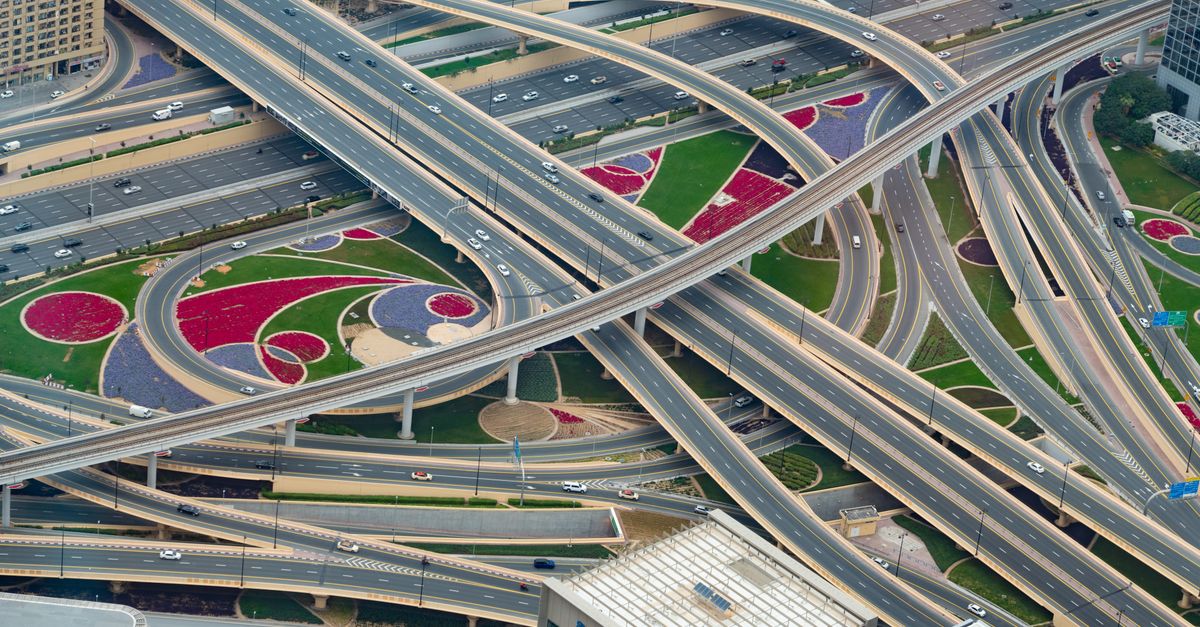
Short answer: The Dubai 2040 Urban Master Plan is the emirate's statutory plan for growing from 3.3 million residents in 2020 to 5.8 million by 2040. It concentrates development in five urban centres, keeps 60% of Dubai's land as nature reserves and rural areas, doubles green and recreational space, and aims to put 55% of residents within 800 metres of a metro or mass-transit station. For a property buyer the practical effects are three: density goes up around stations, low-rise villa land inside the city stays fixed, and transport projects such as the Blue Line (opening 2029) and the Gold Line (2032) set the next price map. Dubai is also ahead of the plan. The population passed 4.8 million in September 2026, roughly 750,000 people ahead of the plan's straight-line path.
Key takeaways
- The plan is law, not a brochure. Law No. 16 of 2023 made it Dubai's approved structural plan and put Dubai Municipality in charge of every planning permit.
- Five centres, not one. Deira and Bur Dubai, Downtown and Business Bay, Dubai Marina and JBR, Expo City and Dubai Silicon Oasis. Everything else is organised around them.
- Density goes to the stations. The plan explicitly raises population density around mass-transit stops. That is where apartment supply will keep arriving.
- Villa land does not scale. Apartments are about 80% of the pipeline to 2030 and villas under 20%, on Knight Frank and Cushman & Wakefield Core figures.
- Mohammed Bin Rashid City sits inside the Downtown catchment, and the Gold Line route map published in April 2026 runs through MBR City, Nad Al Sheba and Meydan.
What does the Dubai 2040 Urban Master Plan actually say?
Sheikh Mohammed bin Rashid launched the plan on 13 March 2021. It is Dubai's seventh master plan since 1960, and the first one written for a city that already had more than three million people in it. The headline numbers come straight from the Dubai Media Office announcement and the UAE government portal.
| Measure | 2020 baseline | 2040 target |
|---|---|---|
| Resident population | 3.3 million | 5.8 million |
| Daytime population | 4.5 million | 7.8 million |
| Nature reserves and rural natural areas | n/a | 60% of the emirate's land |
| Green and recreational space | n/a | Doubled (quoted as +105% in 2023) |
| Land for hotels and tourism | n/a | +134% |
| Land for commercial and economic activity | n/a | 168 sq km |
| Land for education and health | n/a | +25% |
| Public beaches | n/a | Up to +400% |
| Residents within 800 m of mass transit | n/a | 55% |
| Services reachable within 20 minutes | n/a | 80% |
Dubai 2040 Urban Master Plan targets. Sources: Dubai Media Office, 13 March 2021 and 8 June 2023; u.ae. The commercial land figure is an area, not a percentage increase; it is often misquoted.
Two things changed after launch that matter more than the targets. In July 2023 Law No. 16 of 2023 made the plan Dubai's approved structural plan and gave Dubai Municipality sole authority over planning permits. No developer can build outside it. Then in June 2023 Mattar Al Tayer, who chairs the Supreme Committee of Urban Planning, set out the transit targets in his urban planning and wellbeing address: 55% of residents within 800 metres of a station and 80% of services within a 20-minute trip. Those two numbers are the ones that decide where land value goes.
The plan also sets a settlement hierarchy. Five towns of 1 to 1.5 million people each, broken into sectors of 70,000 to 125,000, districts of 20,000 to 30,000, and neighbourhoods of 2,000 to 4,000. If you have ever wondered why new Dubai communities come in such similar sizes, that is why.
How is Dubai tracking against the plan in 2026?
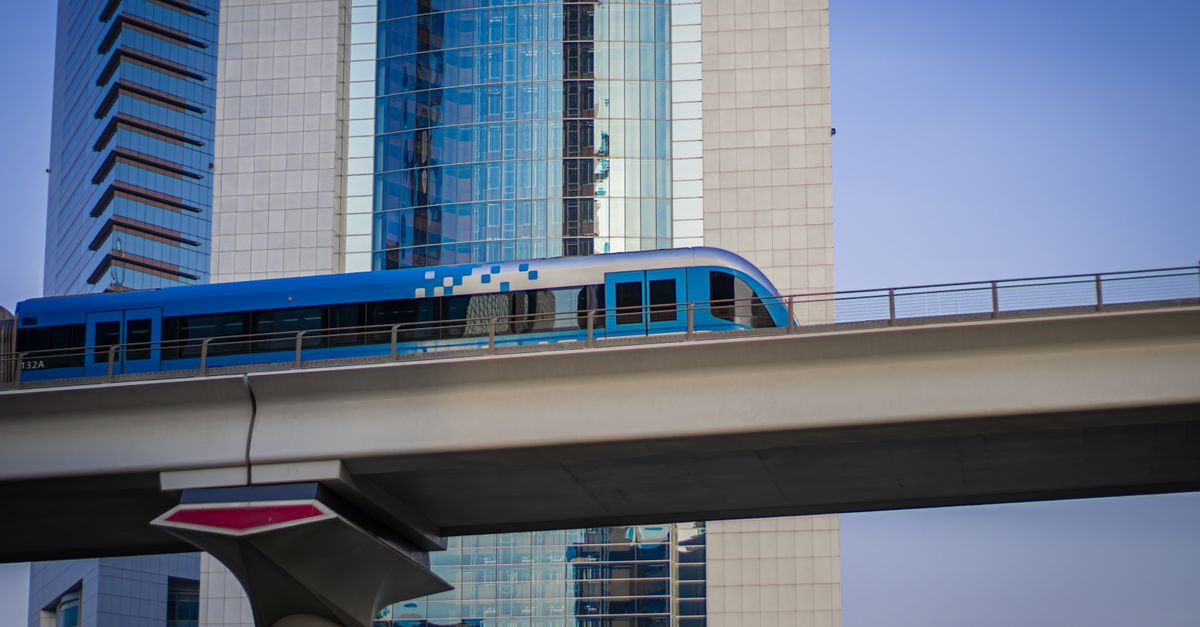
Faster than written. The plan implies growth of roughly 2.9% a year to reach 5.8 million in 2040. Dubai grew 7.5% in 2025 alone. The Dubai Data and Statistics Establishment counted 4,807,185 residents on 29 September 2026, up 226,885 since January, according to Gulf News. On a straight line from 2020 the city should have been at about 4.05 million this year. It is around 750,000 people ahead. At 300,000 new residents a year the 5.8 million target lands closer to 2030 than 2040.
That gap is the single most important thing to understand about Dubai property in 2026. The city is absorbing a decade of planned growth in half the time, and the transport and land-use decisions are being brought forward to match. The projects below are all officially framed as delivering the 2040 plan.
| Project | Scale | Status and date | Why it matters for buyers |
|---|---|---|---|
| Dubai Metro Blue Line | 30 km, 14 stations, AED 20.5 billion | Under construction, opens 9 September 2029 | Links Creek Harbour, Festival City, Ras Al Khor, Silicon Oasis, Academic City and Mirdif to both existing lines |
| Dubai Metro Gold Line | 42 km underground, 18 stations, about AED 34 billion | Announced April 2026, opens 9 September 2032 | Route map runs Al Ghubaiba to Jumeirah Golf Estates via Business Bay, MBR City, Nad Al Sheba and Meydan |
| Etihad Rail passenger service | Dubai to Abu Dhabi in about an hour | Running since 30 September 2026 from Al Yalayis | Makes a Dubai villa a realistic base for an Abu Dhabi job |
| Al Maktoum International Airport | AED 128 billion, 260 million passengers at full build | Phase 1 opens 2032 | Anchors the Expo City and Dubai South centre |
| Al Meydan Street upgrade | 14 km, 3.7 km of bridges, AED 1.16 billion | Awarded August 2026, complete end-2028 | Adds 18% north-south capacity through Meydan and MBR City |
| Dubai Walk | 6,500 km of walkways, 110 bridges and underpasses | Approved December 2024, pilot phase 2025 to 2027 | Raises the walking share of trips from 13% to 25% |
Infrastructure delivering the 2040 plan, as at October 2026. Sources: Dubai Media Office (Blue Line contract, 19 Dec 2024; Al Meydan Street, 30 Aug 2026; Dubai Walk, 7 Dec 2024); Khaleej Times (Gold Line, 22 Apr 2026); The National (Etihad Rail, 30 Sep 2026).
The Gold Line deserves a note of caution. The RTA has published a route map and the Khaleej Times reading of it names Mohammed Bin Rashid City, Nad Al Sheba, Mohammed bin Rashid Gardens and Meydan, with an Etihad Rail interchange at Meydan. The station-by-station list hasn't been released yet. Treat it as a strong signal, not a confirmed stop outside your gate.
What the plan does to villa land
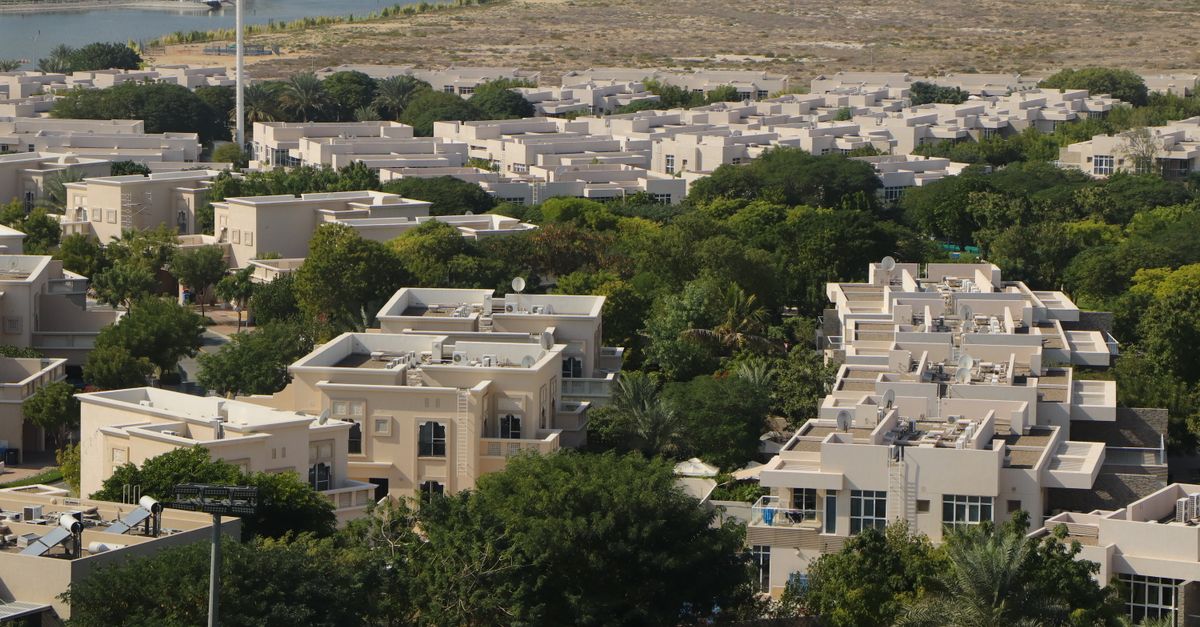
Read the 2021 text closely and one line stands out: the plan commits to "increasing population densities around key mass transit stations". Al Tayer's 2023 address went further and named horizontal urban sprawl as the problem the plan is designed to stop. Put those together and you get the shape of Dubai's next fifteen years. Towers cluster at stations. The land between them, which is where villas sit, does not get rezoned upward, and new villa land is released at the edge of the city rather than the middle.
The supply data already shows it. Knight Frank's Q4 2024 Dubai review put apartments at 80.1% of everything due by 2029 and villas at 17.4%. Cushman & Wakefield Core's August 2026 pipeline, reported by Khaleej Times, counts about 49,700 units completing in 2026, 60,000 in 2027 and roughly 322,000 scheduled by 2030, with villas and townhouses around a fifth of the total. Against a housing stock of just under 900,000 homes, that is a lot of apartments arriving and comparatively few villas.
Prices have followed the split, in both directions. On the ValuStrat index, villas gained 31.6% in 2024 and 25.1% in 2025 against 23.6% and 14.2% for apartments. Then the regional conflict that began on 28 February 2026 took roughly 10% off citywide values by August. Villas fell 1.7% year on year in that reading and apartments 5.3%, per Khaleej Times. The scarce side of the market held up better, which is what you would expect, but it did not escape the drop. We go through that argument properly in our look at whether Dubai property is a bubble. The short version: the plan fixes the amount of central villa land, it doesn't fix the price of it in any given quarter.
We covered the mechanics of that scarcity in why MBR City villa supply is tighter than you think. The 2040 plan is the policy reason behind it. Mohammed Bin Rashid City communities are measured in dozens of villas, the current wave completes in 2026 and 2027, and there's no mechanism in the plan for adding more plots at a fixed distance from Downtown.
The five urban centres, and where to buy near each

Three of the five centres already exist. Two are being built. The plan assigns each one a job, and that job tells you what kind of property will dominate around it.
| Urban centre | Role in the plan | Residential character | Nearby villa options |
|---|---|---|---|
| Deira and Bur Dubai | Heritage and tradition; regeneration rather than new towers | Older apartment stock, Creek-front renewal | Very few; Al Jaddaf and Mirdif are the nearest low-rise areas |
| Downtown and Business Bay | Business and financial core | High-density towers, highest prices per sq ft | MBR City, Nad Al Sheba and Meydan, 10 to 15 minutes out |
| Dubai Marina and JBR | Hospitality, leisure and international tourism | Waterfront apartments, short-term lets | Emirates Hills, Jumeirah Islands, Jumeirah Golf Estates |
| Expo City Dubai | Economic growth hub with affordable housing, logistics and events | New-build, 35,000 residents planned | Expo Valley, Dubai South villas and townhouses |
| Dubai Silicon Oasis | Science, technology and knowledge hub | Mid-market apartments, Blue Line station from 2029 | Cedre Villas, Dubailand communities, Al Barari |
The five urban centres in the Dubai 2040 Urban Master Plan. Roles per the Dubai Media Office, 13 March 2021; residential notes are Swank's own reading of the market in 2026.
A useful rule: the closer a villa district sits to the Downtown and Business Bay centre, the fewer competitors it has, because that is the one centre where new low-rise land simply doesn't exist. The Marina and JBR centre has the Emirates Hills belt behind it. Expo City and Silicon Oasis have open land all around them, which is good for affordability and less good for scarcity.
The transit premium is measurable. CBRE's Dubai Metro Report 2023 tracked buildings near Red Line stations from 2010 to the end of 2022. Homes within a five-minute walk gained 35.8% against 24.1% for Dubai as a whole, and the 10-to-15-minute band gained 43.8%. Rents near stations rose 5.7% between 2018 and 2022 while the city average fell 4.1%. On the Blue Line corridor, Property Monitor data reported by Khaleej Times shows studio rents in Academic City up 43% and Dubai Creek Harbour up 30% since the line was announced in November 2023, before a single train has run.
Where Mohammed Bin Rashid City and Meydan sit in the plan
Neither MBR City nor Meydan is one of the five centres, and we'd rather say that plainly than imply otherwise. What they are is the villa catchment of the Downtown and Business Bay centre. MBR City is bounded by Sheikh Zayed Road, Al Khail Road and Emirates Road, roughly 10 to 15 minutes by car from Downtown, and today its nearest metro is Business Bay station.
Three decisions taken since the plan was approved move the district closer to the core:
- The Gold Line route (April 2026). The published map runs from Business Bay through MBR City, Nad Al Sheba, Mohammed bin Rashid Gardens and Meydan, with an Etihad Rail interchange at Meydan, before continuing to Al Barsha South and Jumeirah Golf Estates. Opening is set for 9 September 2032.
- Al Meydan Street (August 2026). The RTA awarded AED 1.16 billion of contracts to rebuild about 14 km of Al Meydan Street and Al Marabea' Street with 3.7 km of bridges, a 700 m elevated link on Dubai-Al Ain Road and cycle tracks, due by the end of 2028. The Dubai Media Office release puts the north-south capacity gain at 18%.
- Ras Al Khor Wildlife Sanctuary (June 2025). Dubai Municipality awarded the first AED 100 million phase of a AED 650 million upgrade covering 6.4 sq km, with mangrove cover up 60%, due at the end of 2026 and explicitly aligned with the 2040 plan. For MBR City it means the sanctuary stays a protected edge, not a future development site.
This is the corridor we build in. Selora Residences is a community of 32 villas in District 11, Mohammed Bin Rashid City, with four, five and six-bedroom homes on plots that start at 4,667 sq ft. Lua Residences sits in the same district. Both were designed as low-density communities on the assumption that the plan would hold: towers at the stations, villas in between, and no new villa plots released this close to Downtown. So far that is exactly how it has played out. For the street-level view of the district, prices and handover dates, see our District 11 area guide and what it's like to live in MBR City.
One caveat we'd want a buyer to hear. A metro station six years away is a reason to hold, not a reason to overpay today. The CBRE numbers above are gains over twelve years around stations that already existed. Buy MBR City for the distance to Downtown and the fixed supply, and treat the Gold Line as the upside case.
What the plan means for a buyer in 2026

Strip out the vision language and the plan gives a buyer five practical tests to run on any property.
- Which centre is it serving? Property inside or beside the Downtown centre competes with the least new supply. Property near Expo City or Silicon Oasis competes with the most, because that is where the plan sends growth.
- How far is the nearest station, now and in 2032? Check the Blue Line map today and the Gold Line map once the station list is published. The 800-metre radius is the plan's own measure.
- Is the land low-rise by design? Under Law No. 16 of 2023 a master-planned villa district cannot be re-zoned for towers without a change to the plan. That protection is worth more in the centre than at the edge.
- What is the delivery risk? Roughly 322,000 units are scheduled by 2030. Historically far fewer arrive on time, which softens the supply shock for apartments but does nothing for villas, which weren't in the pipeline anyway.
- Does the price already include the infrastructure? Rents on the Blue Line corridor moved 15% to 43% before construction finished. Some of the Gold Line effect will be in MBR City asking prices by the time the station list is confirmed.
The wider policy stack points the same way. The Dubai Real Estate Sector Strategy 2033 targets AED 1 trillion in transactions and is written as aligned with the 2040 plan; 2025 closed at more than 270,000 transactions worth AED 917 billion. The AED 18.3 billion Public Parks and Greenery Strategy adds 310 new parks and takes green space to 187 sq km by 2040, which is the "doubling" target being funded. None of that guarantees a price. It does tell you the city intends to keep spending on the parts of Dubai where people already live.
If you are weighing a villa inside the Downtown catchment against a cheaper one further out, the honest trade is this: the outer villa buys more space per dirham today, the inner villa buys land the plan has effectively capped. Our community-by-community villa price guide puts numbers on both, and the 2027 market forecast covers how the supply wave is expected to land. If you'd like to see what a low-density villa inside that catchment actually looks like, talk to the Swank team about Selora Residences.
Frequently asked questions
What is the Dubai 2040 Urban Master Plan?
It is Dubai's statutory plan for growing from 3.3 million residents in 2020 to 5.8 million by 2040, launched on 13 March 2021 and given legal force by Law No. 16 of 2023. It concentrates development in five urban centres, keeps 60% of the emirate's land as nature reserves and rural areas, and aims to place 55% of residents within 800 metres of a mass-transit station.
What are the five urban centres in the Dubai 2040 plan?
Deira and Bur Dubai (heritage), Downtown and Business Bay (business and finance), Dubai Marina and JBR (tourism and leisure), Expo City Dubai (economic growth and affordable housing) and Dubai Silicon Oasis (science and technology).
Is Dubai ahead of or behind the 2040 population target?
Ahead. Dubai counted 4,807,185 residents on 29 September 2026, roughly 750,000 more than a straight-line path from 3.3 million in 2020 to 5.8 million in 2040 would give. At the current pace of about 300,000 new residents a year the target is reached around 2030.
How does the 2040 plan affect villa prices?
The plan raises density around transit stations and routes new supply into five centres, so central low-rise villa land stays fixed while apartment supply keeps growing. Apartments are about 80% of the pipeline to 2030 and villas under 20%. That supports central villa values over time, although villas still fell about 1.7% year on year in August 2026 after the regional conflict that began in February.
Will the Dubai Metro reach Mohammed Bin Rashid City and Meydan?
The Gold Line route map published in April 2026 runs from Business Bay through MBR City, Nad Al Sheba and Meydan, with an Etihad Rail interchange at Meydan, and is due to open on 9 September 2032. The official station-by-station list has not been released, so treat it as a strong signal rather than a confirmed stop.
Does the plan limit where developers can build?
Yes. Law No. 16 of 2023 made the 2040 plan Dubai's approved structural plan and gave Dubai Municipality sole authority over planning permits. Development outside an approved master plan is not permitted.
Sources & further reading: Dubai Media Office: 2040 plan launch (13 Mar 2021) · Dubai Media Office: urban planning and wellbeing (8 Jun 2023) · u.ae: Dubai 2040 Urban Master Plan · Dubai Media Office: Blue Line contract · Khaleej Times: Gold Line route map · Dubai Media Office: Al Meydan Street · Gulf News: Dubai population, Sep 2026 · CBRE: Dubai Metro Report 2023 · Knight Frank: Dubai residential review Q4 2024 · Khaleej Times: ValuStrat August 2026 index · Dubai Media Office: Real Estate Sector Strategy 2033 · Dubai Media Office: Ras Al Khor sanctuary
Written by Faizan Ahmed, Digital & SEO Lead, Swank Development. Last updated 8 October 2026. Figures are indicative and were verified against official UAE government sources at the time of writing; always confirm current fees with the Dubai Land Department or your conveyancer.