Cost of Living in Dubai 2026: A Family Budget, Line by Line


Short answer: A family of four in Dubai typically needs AED 20,000 to AED 35,000 per month (roughly USD 5,450–9,530) for a comfortable lifestyle in 2026, and AED 50,000+ for a premium one with international schools and a villa. Housing takes 30% to 45% of the total and school fees a further 15% to 25% — together typically two-thirds of the budget. The average Dubai school fee for 2026–27 is about AED 42,000 per child per year, ranging from roughly AED 14,000 for CBSE schools to AED 65,000 for IB. There is no personal income tax, which is what makes the arithmetic work.
Key takeaways
- Two line items decide everything: rent or mortgage, and school fees. Together they are usually 55% to 70% of the total.
- Average Dubai school fees are about AED 42,000 per child for 2026–27, with a huge curriculum spread — roughly AED 14,000 (CBSE) to AED 65,000 (IB).
- DEWA runs AED 900 to AED 1,800 a month for a family home, rising sharply in summer; electricity is slab-priced from AED 0.23/kWh to AED 0.38/kWh.
- The 5% municipality housing fee applies whether you rent or own, charged on annual rental value through the DEWA bill.
- No income tax changes the comparison entirely. AED 30,000 gross a month in Dubai is AED 30,000 net — the equivalent London or Mumbai gross salary is substantially higher.
What does a family actually spend per month in Dubai?
Here is the honest version, for a family of four with two school-age children, at three lifestyle levels. Every figure is monthly and in dirhams.
| Category | Practical | Comfortable | Premium |
|---|---|---|---|
| Housing (rent) | 8,000 – 11,000 | 13,000 – 20,000 | 25,000 – 45,000 |
| School fees (2 children, annualised) | 4,000 – 6,000 | 8,000 – 12,000 | 14,000 – 20,000 |
| DEWA (electricity and water) | 700 – 1,100 | 900 – 1,800 | 1,800 – 3,500 |
| Municipality housing fee (5% of rent) | 400 – 550 | 650 – 1,000 | 1,250 – 2,250 |
| Groceries | 2,000 – 2,800 | 2,500 – 4,000 | 4,000 – 6,500 |
| Transport (car, fuel, Salik, parking) | 1,200 – 1,800 | 1,800 – 3,000 | 3,000 – 6,000 |
| Health insurance (family) | 800 – 1,300 | 1,300 – 2,500 | 2,500 – 5,000 |
| Telecoms and internet | 400 – 600 | 500 – 800 | 700 – 1,200 |
| Dining, leisure, activities | 1,500 – 2,500 | 2,500 – 5,000 | 5,000 – 12,000 |
| Domestic help | 0 | 2,500 – 3,500 | 3,500 – 6,000 |
| Monthly total | ~19,000 – 27,650 | ~33,650 – 53,600 | ~60,750 – 107,450 |
Indicative 2026 monthly costs for a family of four with two school-age children. School fees are annual KHDA-regulated fees divided by twelve. Ranges reflect genuine market spread, not uncertainty.
The widely quoted figure of AED 20,000 to AED 35,000 a month for a family corresponds to the practical band and the lower half of the comfortable band. It is achievable, and it assumes a two- or three-bedroom apartment rather than a villa, mid-tier schooling and one car.
Look at the ranges rather than the totals. The gap between practical and premium is driven almost entirely by two rows — housing and schools. Groceries roughly double across the whole spectrum; housing quadruples.
School fees: the line that decides the budget

For families, school fees are the single most consequential number and the one most often underestimated before arrival.
The average Dubai school fee for the 2026–27 academic year is approximately AED 42,000 per child. The curriculum spread is enormous:
| Curriculum | Typical annual fee per child | Notes |
|---|---|---|
| Indian (CBSE / ICSE) | AED 14,000 average | Large, well-established schools; the value end of the market |
| British (Foundation – Year 6) | AED 30,000 – 55,000 | Fees rise materially by year group |
| British (Years 10 – 13) | AED 55,000 – 112,000 | The top of the range sits at the highest-rated schools |
| American | AED 35,000 – 75,000 | Broad quality spread |
| IB | AED 65,000 average | The most expensive curriculum on average |
| Dubai average, all schools | ~AED 42,000 | 2026–27 academic year |
KHDA regulates private school fees in Dubai and sets the maximum permissible annual increase. Verify current fees directly with the school.
Three practical points that materially change the number.
- Fees rise by year group. A school quoting AED 45,000 for Year 2 may charge AED 90,000 for Year 13. Budget the whole school career, not the entry year.
- The fee is not the cost. Registration, uniform, books, transport and trips typically add 10% to 20%. School bus alone runs AED 4,000 to AED 9,000 a year.
- KHDA caps increases, using an Education Cost Index linked to the school's inspection rating. That is real protection, but it applies to increases, not to the starting level.
Many employers still contribute to schooling as part of an expatriate package. Whether yours does is worth establishing before you compare salaries, because two children at an IB school is AED 130,000 a year of post-tax income in a market with no tax to relieve it.
Housing: renting against owning

Housing takes 30% to 45% of a Dubai family budget. For a family relocating with a multi-year horizon, the question is whether that money should be rent or equity.
| Renting a 4-bed villa | Owning the same villa | |
|---|---|---|
| Monthly outlay | AED 20,000 – 30,000 rent | Mortgage on ~AED 7M at 75% LTV, 20 yrs: roughly AED 33,000 |
| Up-front cash | 1–2 cheques + 5% agency + deposit | 25% deposit + ~6% fees ≈ AED 2.2M |
| Service charge | Landlord pays | AED 7,600 – 30,400/yr |
| Municipality housing fee | 5% of rent | 5% of rental value |
| Maintenance | Largely landlord | 0.5% – 1% of value per year |
| Annual rent increases | Capped by RERA index but real | None — payment is fixed or rate-linked |
| Equity built | None | Full, plus any capital growth |
| Residency | Employer-linked | 10-yr Golden Visa above AED 2M |
Illustrative comparison. Mortgage figure is indicative only; actual rates and terms vary by lender and profile.
The monthly numbers are closer than most people expect, and the difference is that one builds equity and one does not. The catch is the up-front cash: roughly AED 2.2 million to buy against a few months' rent to lease. That is the real barrier, not the monthly cost.
The full fee schedule is in how to buy a villa in Dubai, the community-level price picture is in Dubai villa prices, and if you are renting, the rent cap and the 90-day notice rule are in our guide to the RERA calculator and rent index.
Utilities, transport and the smaller lines
These are the costs people either forget or wildly misjudge before they arrive.
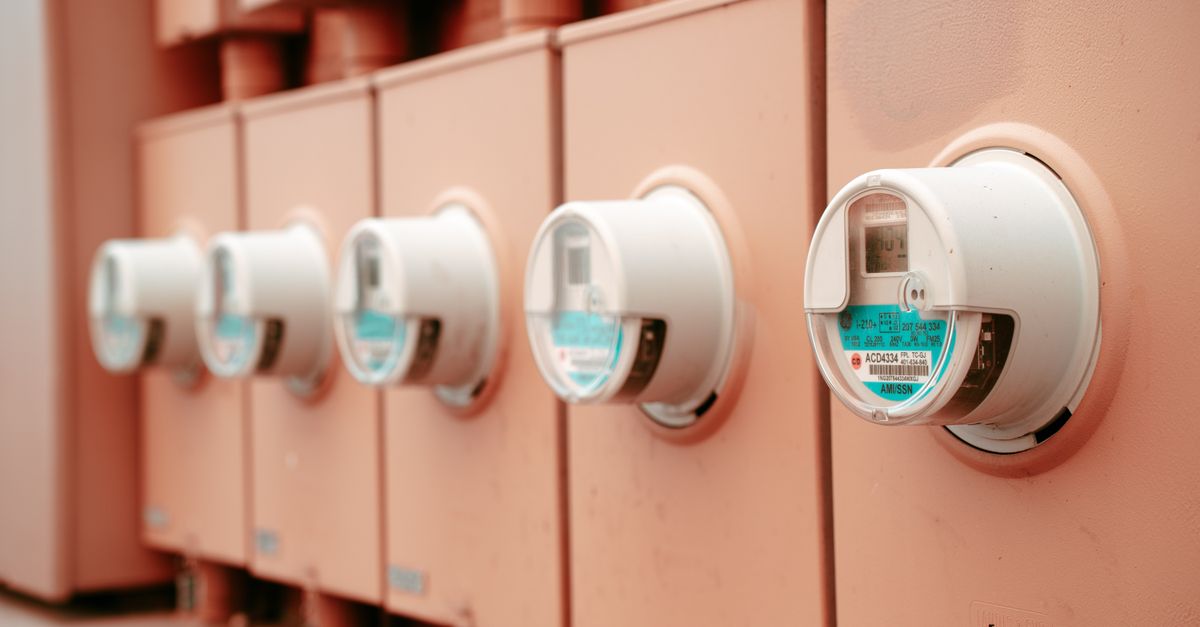
- DEWA. Electricity is slab-priced, starting at AED 0.23 per kWh for the first 2,000 kWh and rising to AED 0.38 per kWh above 6,000 kWh. A family home runs AED 900 to AED 1,800 a month, and summer cooling can push a large villa well past AED 2,500. Some apartment buildings bill chilled water separately, which is an additional line.
- Municipality housing fee. 5% of annual rental value, divided by twelve and added to the DEWA bill. It applies to owner-occupiers too, assessed on the property's rental value.
- Transport. Fuel is cheap by European standards and the distances are long. Budget AED 1,800 to AED 3,000 a month for a family car including fuel, Salik road tolls, insurance and parking. Public transport is excellent along the metro corridors and largely absent from villa communities — which is why villa households almost always run two cars.
- Health insurance. Mandatory for every resident in Dubai. Employers must cover the employee; dependants are often the family's own cost, at AED 1,300 to AED 2,500 a month for a family on a mid-tier plan.
- Groceries. AED 2,500 to AED 4,000 a month for a family of four. Comparable to Western Europe at Carrefour or Spinneys, meaningfully less at Union Coop or Lulu, meaningfully more at Waitrose.
- Domestic help. A live-in helper costs roughly AED 2,500 to AED 3,500 a month all-in including visa sponsorship, medical and accommodation. This is the line that most changes the felt cost of living relative to Europe or North America.
How the no-tax position changes the comparison
Comparing Dubai's cost of living to another city on gross numbers produces the wrong answer, because the UAE levies no personal income tax and no capital gains tax on individuals.
| Dubai | London | Mumbai | |
|---|---|---|---|
| Personal income tax | None | 20% – 45% plus National Insurance | Up to 30% plus surcharge |
| Capital gains tax on property | None | Yes | Yes |
| Annual property tax / council tax | None — 5% housing fee on rental value only | Council tax | Municipal property tax |
| VAT | 5% | 20% | GST 5% – 28% by category |
| What AED 30,000/month gross is worth net | AED 30,000 | Roughly AED 19,000 – 21,000 equivalent | Roughly AED 21,000 – 24,000 equivalent |
Directional comparison only. Your own liability depends on tax residence, domicile and nationality — US citizens in particular remain taxable on worldwide income regardless of residence.
The practical consequence: a Dubai package that looks equivalent to a London one on gross numbers is typically 40% to 50% better in net terms, before the higher school fees are deducted. Whether it comes out ahead depends almost entirely on how many children you have in school.
One caveat that is easy to miss. Your home country may still tax you. US citizens are taxed on worldwide income wherever they live; UK and Indian rules depend on residence tests and remittances. The country-specific position is in buying property in Dubai from the UK, from Europe and from the USA.
What income do you need to live comfortably in Dubai?

- Single professional: AED 12,000 – 18,000 a month supports a one-bedroom apartment in a good area, a car and an active social life.
- Couple, no children: AED 20,000 – 30,000 a month is comfortable, with a two-bedroom apartment and the capacity to save.
- Family of four, apartment, mid-tier schools: AED 30,000 – 40,000 a month.
- Family of four, villa, top-tier schools: AED 55,000 – 80,000 a month, of which schools alone may be AED 15,000.
- To buy rather than rent: add the up-front cash requirement, which for a AED 7 million villa is roughly AED 2.2 million between the deposit and fees.
Those bands assume no employer housing or schooling allowance. Many packages still include one or both, which shifts everything — establish what yours covers before you compare it to what you earn now.
If you are weighing the move more broadly, our Dubai expat living guide covers the practical transition, and four-bedroom villas in Dubai sets out what the family-home end of the housing market costs to buy rather than rent.
Frequently asked questions
How much does a family need per month in Dubai in 2026?
A family of four typically needs AED 20,000 to AED 35,000 a month for a comfortable lifestyle, and AED 50,000 or more for a premium one with a villa and top-tier international schooling. Housing takes 30% to 45% of the budget and school fees a further 15% to 25%.
How much are school fees in Dubai?
The average across Dubai for the 2026–27 academic year is about AED 42,000 per child. Indian CBSE schools average around AED 14,000, IB schools around AED 65,000, and the highest-rated British schools reach AED 112,000 in the senior years. KHDA regulates fees and caps annual increases.
How much is a DEWA bill in Dubai?
AED 900 to AED 1,800 a month for a typical family home, rising to AED 2,500 or more for a large villa in summer. Electricity is slab-priced from AED 0.23 per kWh for the first 2,000 kWh up to AED 0.38 per kWh above 6,000 kWh. The 5% municipality housing fee is added to the same bill.
Is Dubai cheaper than London?
On gross salary Dubai often looks similar; on net income it is usually 40% to 50% better, because the UAE levies no personal income tax, no capital gains tax and no annual property tax. The offset is school fees, which are paid privately in Dubai and can exceed AED 100,000 a year for two children.
Do you pay tax in Dubai?
There is no personal income tax and no capital gains tax on individuals in the UAE. VAT is 5%, and a 5% Dubai Municipality housing fee is charged on annual rental value through the DEWA bill. Your home country may still tax you — US citizens are taxed on worldwide income regardless of where they live.
Is it cheaper to rent or buy in Dubai?
Monthly costs are closer than most people expect: rent on a four-bedroom villa runs AED 20,000 to AED 30,000, while a mortgage on a comparable AED 7 million villa at 75% LTV over 20 years is around AED 33,000 plus service charges. Buying builds equity but requires roughly AED 2.2 million up front between deposit and fees.
Sources & further reading: KHDA — Knowledge and Human Development Authority · DEWA · Dubai Municipality · UAE Government portal
Written by Faizan Ahmed, Digital & SEO Lead, Swank Development. Last updated 6 September 2026. Figures are indicative and were verified against official UAE government sources at the time of writing; always confirm current fees with the Dubai Land Department or your conveyancer.